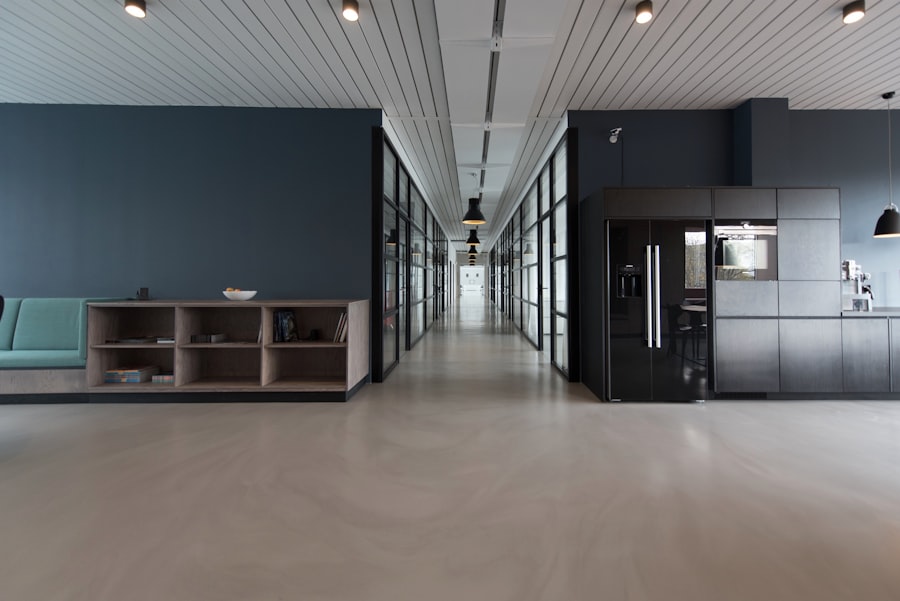
Central living atrium, ground level — Marina Bay, Singapore
A building designed to move — and to make 80,000 daily commuters feel elevated by their passage through it.
Singapore's Marina Bay district is one of the densest urban environments on earth. Every square metre must justify itself, typically through yield calculations that leave little room for generosity. The Meridian Plaza brief asked us to sit a major commercial complex directly above the island's busiest MRT interchange — a site where infrastructure engineering typically dominates and architecture is reduced to cladding and signage.
We saw it differently. We saw a building that 80,000 people would pass through every single day — people who, statistically, spend more time in their commute than they do in most deliberate acts of leisure. The question we started with was: what if those 80,000 people left this building feeling slightly better than when they arrived? What would that require architecturally?
The answer was nature. Singapore's tropical biophilic tradition — the Gardens by the Bay, the airport's forest — has established that green living infrastructure in the built environment is not just desirable but expected. We designed Meridian Plaza around a central atrium of living wall, 42 metres high and 8 metres wide, irrigated by harvested rainwater, naturally ventilated by a passive chimney stack, and lit entirely by a glass roof engineered to manage solar gain without mechanical cooling.
The structural challenge of building above three active MRT lines simultaneously running in different directions, at different depths, with different vibration profiles, is one of the most technically demanding problems in contemporary construction. Our structural engineer, Arup Singapore, developed an isolation slab system that decouples the building's foundations from the tunnel crowns entirely — a 2.4-metre deep cellular concrete raft that acts as a seismic isolator, absorbing and distributing vibration loads across the entire foundation plane. It added four months and significant cost to the construction programme. It was non-negotiable.
The passive cooling strategy was validated through twelve months of computational fluid dynamics modelling before a planning application was submitted. The building's form — a gently tapered tower with a pronounced notch cut into its northern face — was arrived at not for aesthetic reasons but because it creates a Venturi effect at the atrium's crown, drawing warm air upward and out through automated clerestory vents at a rate that eliminates the need for mechanical HVAC in the lower fifteen floors. The result is a significant reduction in the building's cooling energy consumption, which in Singapore's climate represents the single largest operational cost.
The living wall — 3,200 square metres of planted surface — was curated in collaboration with the Singapore Botanical Gardens. Every plant species was selected for its performance in the specific light and humidity conditions of the atrium, its contribution to air quality, and, frankly, its beauty. The result is a vertical ecosystem of 340 species that changes seasonally, supports a documented colony of native bird species, and has become, by any measure, the most photographed interior in Singapore.