Central pedestrian street, looking north — Vesterbro, Copenhagen
Seven buildings, one neighbourhood, one shared sky — each oriented to Copenhagen's most precious resource: northern light.
The site had been a wound in the city for thirty years. The old Vesterbro railway maintenance yard — three hectares of cracked concrete and rusting rail — sat between a dense residential neighbourhood and the city's expanding cultural corridor, undisturbed and unloved, generating nothing.
Nordic Urban Partners acquired the site with a brief that, to their credit, prioritised neighbourhood integration over yield. We were appointed in 2019, and spent the first six months simply listening: to residents, to local shopkeepers, to the city's planning department, and to the site itself, which had a surprising architectural legacy we felt obliged to honour.
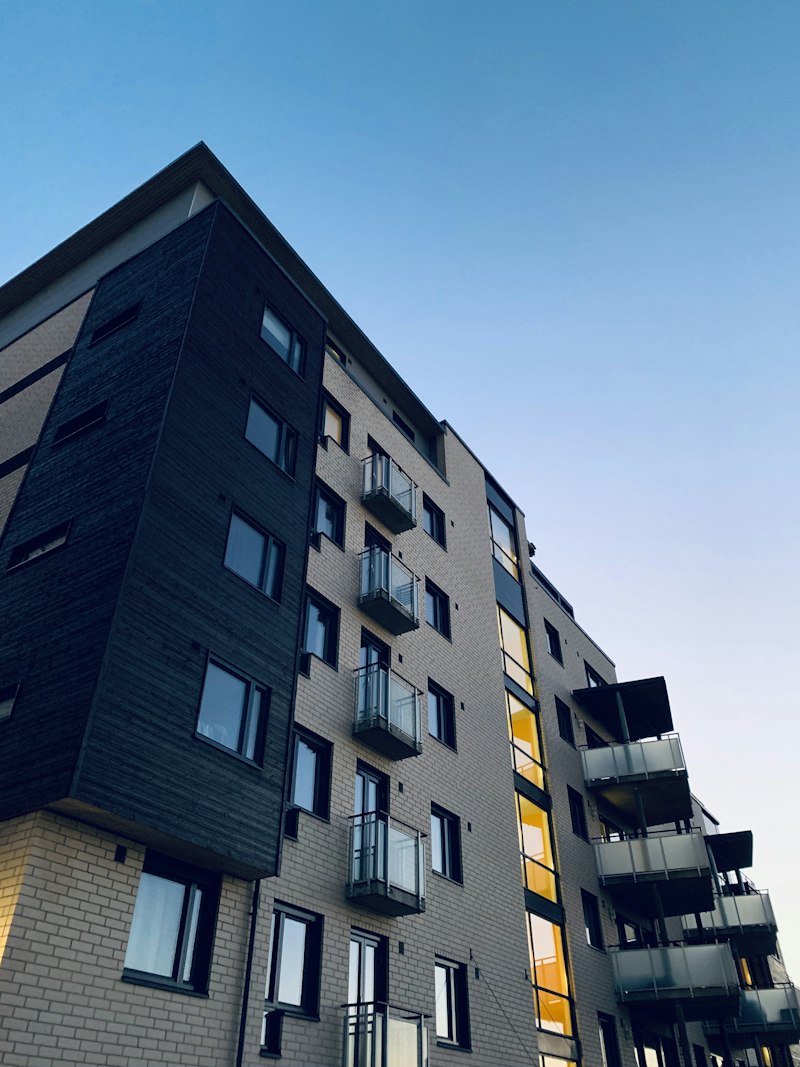
What emerged was not a development. It was a neighbourhood. Seven buildings, each between four and seven storeys, arranged around two shared courtyards and a central pedestrian street that reconnects the areas that the railway had long divided. The ground floors are entirely given over to public programme: market halls, workshops, a small public library annex, and restaurants that spill out in summer.
The structural decision — to build in cross-laminated timber rather than cast concrete — was not initially part of the brief. We proposed it, modelled it financially, and won a seven-month argument. The result is that Solen District locks approximately 4,200 tonnes of carbon into its structure rather than releasing it. It is also 40% lighter than an equivalent concrete structure, which allowed us to site foundations with minimal disruption to the old rail tracks we chose to preserve as a landscape feature in the northern courtyard.
Light was the governing design force throughout. Copenhagen sits at 55° north latitude — roughly equivalent to Moscow or Edmonton — and its winters are long and luminous in a particular, low-angle way that architects ignore at their peril. Every building in the district was individually orientated not just to maximise solar gain, but to protect the shared courtyard spaces from overshadowing during the winter months. The result is that even on December mornings, the courtyards receive meaningful direct sunlight between 10am and 2pm — something rare in urban Copenhagen.
The ground-floor activation strategy was developed in direct partnership with the municipality and local residents. Rather than filling units with retail and hoping the market would animate them, we designed a programme for the ground floors first and then designed the buildings around it. The central market hall, which operates six days a week, was agreed before a structural drawing existed. This sequencing — programme before form — is, we believe, the correct order of operations for any project that claims to serve a city rather than simply occupy it.